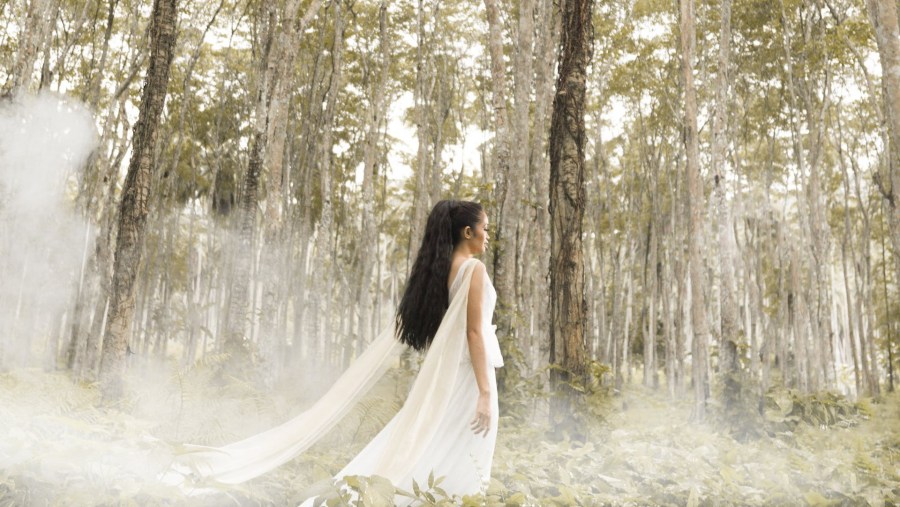
Discovering the Magic of the Festival of Diana: Celebrating Nature and Femininity + Tea Cerem

The Festival of Diana, also known as the Feast of the Assumption of the Blessed Virgin Mary, is a celebration of nature and femininity that dates back to ancient Roman times. It is a time to honor the goddess Diana, who was viewed as the protector of nature, animals, childbirth, and women. This festival, not to be confused with the Feast of Diana on August 17th, is often celebrated February 12th. It is one of the oldest and most revered in the Pagan calendar, and it has been celebrated by different cultures around the world for centuries. The Festival of Diana is a time to connect with the natural world, to celebrate femininity, and to create a sense of community and belonging. In this post, we will explore the history and significance of the Festival of Diana, as well as how it is celebrated today. Join us on a journey of discovery as we explore the magic of this ancient and powerful festival!


Introduction to the Festival of Diana

The Festival of Diana is a captivating celebration that honors the essence of nature and femininity. Rooted in ancient traditions, this enchanting festival takes place every year in the heart of a lush forest, where participants gather to pay homage to the goddess Diana.

Diana, the Roman goddess of the moon, the hunt, and nature, embodies the strength and grace of femininity. She is revered for her connection to the wilderness, animals, and the cycles of life. The Festival of Diana is a time to celebrate and honor her divine presence, as well as to embrace the sacred bond between humans and the natural world.

If you were to step into the festival grounds, it would feel like entering a mystical realm. The air is filled with a sense of anticipation and excitement, as attendees from all walks of life come together to immerse themselves in the enchanting atmosphere. The forest is adorned with vibrant flowers, delicate ribbons, and mystical symbols, creating a visually stunning backdrop for the festivities.

As the sun sets, the festival comes alive with music, dance, and rituals that honor the goddess Diana. The sound of drums reverberates through the trees, creating a rhythmic heartbeat that draws everyone into a state of unity and connection. Performers don elaborate costumes, embodying the spirit of the goddess and captivating the audience with their mesmerizing movements.

Throughout the festival, workshops and ceremonies are held to deepen the understanding of Diana’s teachings and the importance of nurturing our connection to nature. Participants have the opportunity to learn from wise elders, engage in healing practices, and explore their own divine femininity.

The Festival of Diana is not just a celebration; it is a transformative experience that allows attendees to reconnect with their own inner magic and the magic of the natural world. It is a time to honor the cycles of life, embrace the power of femininity, and celebrate the beauty and abundance of nature.


The origins and history of the Festival

The Festival of Diana is a captivating celebration deeply rooted in ancient traditions and mythology. To truly appreciate the magic of this festival, it is essential to understand its origins and rich history.

Dating back to ancient Roman times, the Festival of Diana was originally dedicated to the goddess Diana, the divine embodiment of nature, fertility, and femininity. Diana, often associated with the moon and the hunt, was revered as a powerful deity who protected women and the natural world.

The festival was celebrated in various forms across different regions, but its core essence remained the same – a joyful tribute to the goddess and all that she represented. It was a time for communities to come together, honor the bountiful gifts of nature, and express gratitude for the feminine energy that permeated their lives.

Throughout history, the Festival of Diana evolved and adapted, incorporating elements from different cultures and belief systems. In some regions, it became intertwined with the celebration of the harvest, while in others, it merged with existing pagan rituals and festivities.

Despite its evolution, the festival has always maintained its focus on embracing the sacred connection between nature and femininity. It serves as a reminder of the inherent power and beauty found in both the natural world and the divine feminine energy.

Today, the Festival of Diana continues to enchant and inspire. It has transcended time and borders, captivating people from all walks of life who seek to reconnect with nature and celebrate the strength and grace of femininity.


The significance of Diana in ancient mythology

Diana, the goddess of the hunt and moon, holds a significant place in ancient mythology. Her origins trace back to the Roman pantheon, where she was revered as a powerful and independent deity. Diana represented not only the wild and untamed aspects of nature but also the embodiment of femininity and strength.

In ancient Roman culture, Diana was highly revered as the protector of forests, animals, and all things related to the natural world. She was often depicted as a skilled archer, swift and agile in her movements, symbolizing her connection to the hunt. This aspect of her character represented her ability to provide sustenance and protection to her followers.

Furthermore, Diana was seen as a symbol of femininity, independence, and empowerment. Many tales depicted her as a strong-willed and assertive goddess who rejected traditional gender roles and embraced her own unique path. She was often associated with female warriors and was seen as an inspiration for women to embrace their own strength and individuality.

The Festival of Diana celebrates these qualities and seeks to honor the goddess’s influence on ancient mythology. It serves as a reminder of the importance of nature and the divine feminine in our lives. Through various rituals, ceremonies, and festivities, participants can connect with the essence of Diana and tap into the ancient wisdom she represents.


The connection between nature and femininity in the Festival

The Festival of Diana is a celebration that beautifully intertwines the concepts of nature and femininity. This enchanting event pays homage to the Roman goddess Diana, who is closely associated with the natural world and the feminine spirit.

Nature plays a vital role in the Festival of Diana, as it is celebrated outdoors amidst the breathtaking beauty of lush greenery, blooming flowers, and serene landscapes. The setting itself becomes a reflection of the goddess’s domain, creating an atmosphere of harmony and connection with the natural world. Participants are encouraged to immerse themselves in the surroundings, taking in the sights, sounds, and scents of nature, which further enhances the experience.

Furthermore, the festival embraces and celebrates femininity in all its forms. Diana, as a goddess of the moon, represents the nurturing, intuitive, and powerful aspects of womanhood. During the festival, women are encouraged to embrace their feminine essence, channeling their inner strength and wisdom. This celebration serves as a reminder of the inherent connection between femininity and nature, as both possess a unique ability to nurture, create, and sustain life.

Throughout the festival, various rituals and ceremonies are conducted to honor both nature and femininity. These rituals may include offerings to the goddess, dances that mimic the movements of the natural world, and ceremonies that acknowledge the cyclical nature of life. Participants engage in these activities with a deep sense of reverence and respect, recognizing the profound interconnectedness between themselves, nature, and the divine feminine.

The Festival of Diana provides a transformative experience, allowing attendees to tap into the magic and wisdom that resides within the natural world and the feminine spirit. It serves as a beautiful reminder of the power and beauty that can be found when we embrace and honor the connection between nature and femininity.


Rituals and traditions associated with the Festival

The Festival of Diana is a celebration deeply rooted in ancient traditions and rituals that honor nature and femininity. These rituals have been passed down through generations, preserving the magic and significance of this enchanting festival.

One of the most cherished rituals associated with the Festival of Diana is the lighting of bonfires. As the sun sets, people gather around these flickering flames, their warm glow illuminating the night sky. It is believed that these fires symbolize the power of transformation and renewal. Participants offer prayers and wishes to the goddess Diana, seeking her blessings for abundance and protection.

Another significant tradition is the weaving of flower crowns. Fragrant blossoms, carefully chosen and delicately intertwined, create stunning headdresses that adorn the heads of both women and men. These floral crowns symbolize the connection between humans and nature, reminding us of the beauty and harmony that exists in the natural world.

During the Festival of Diana, a sacred procession takes place, led by priestesses dressed in flowing white robes. They carry baskets filled with offerings of fruits, herbs, and flowers, symbolizing gratitude for the bountiful gifts of the earth. As the procession moves through the streets, the air is filled with music and joyful chants, creating an atmosphere of celebration and reverence.

Throughout the festival, various ceremonies and performances take place, showcasing the talents and creativity of the community. Traditional dances, storytelling, and theatrical performances bring ancient myths and legends to life, captivating the audience and connecting them to their ancestral heritage.

These rituals and traditions are not merely symbolic gestures; they hold deep meaning and serve as a reminder of our interconnectedness with the natural world. By participating in these age-old practices, we honor the divine feminine energy and express our gratitude for the abundance and beauty that surrounds us.

As the Festival of Diana continues to enchant and inspire, it reminds us of the importance of preserving our traditions and connecting with our roots. Through these rituals, we tap into the magic that lies within us and embrace the profound connection between nature, femininity, and the human spirit.


Exploring the magical elements of the celebration

One of the most magical elements of the festival is the setting itself. The celebration takes place in a lush forest, where ancient trees tower overhead, creating a canopy that seems to touch the heavens. The air is filled with the sweet scent of flowers, and the gentle rustling of leaves provides a soothing backdrop to the festivities. It is as if the forest itself comes alive during this time, welcoming all who enter with open arms.

Another enchanting aspect of the festival is the rituals and traditions that are observed. These rituals are designed to connect participants with the divine feminine energy that permeates the natural world. From dance ceremonies that mimic the movements of the wind to offerings made to the goddess Diana, each ritual is a deeply meaningful and transformative experience.

The festival also showcases the incredible talent and creativity of its participants. Artists, musicians, and performers come together to create a vibrant tapestry of color and sound. The air is filled with the melody of music and the sight of beautifully crafted costumes and artwork. It is a feast for the senses, a true celebration of human creativity and expression.

But perhaps the most magical element of the Festival of Diana is the sense of community and connection that is fostered during this time. People come together as strangers and leave as friends, united by their shared love for nature and their reverence for the divine feminine. It is a time when walls come down, and people open their hearts to one another, creating a space of love, acceptance, and understanding.


How the Festival promotes empowerment and equality

The Festival of Diana is not just a celebration of nature and femininity; it also serves as a platform to promote empowerment and equality. This enchanting festival embraces the spirit of inclusivity, encouraging individuals from all walks of life to come together and celebrate their unique identities.

One of the key ways in which the Festival promotes empowerment is by showcasing the strength and resilience of women. Throughout history, women have often been marginalized and their contributions overlooked. However, the Festival of Diana aims to shine a spotlight on the achievements of women, both past and present, and to inspire others to embrace their own power.

During the festival, various activities and workshops are organized to foster a sense of empowerment among attendees. These may include discussions on gender equality, self-care practices, and personal development. By providing a safe and supportive environment for individuals to share their experiences and learn from one another, the Festival of Diana encourages personal growth and self-empowerment.

Additionally, the festival promotes equality by challenging traditional gender roles and stereotypes. It celebrates the diversity of gender identities and encourages individuals to express themselves authentically, free from societal expectations. Through artistic performances, exhibitions, and interactive experiences, the Festival of Diana fosters an atmosphere of acceptance and understanding, where everyone is encouraged to embrace their true selves.

Furthermore, the festival actively supports initiatives and organizations that work towards gender equality and women’s rights. Whether through fundraising efforts, partnerships, or advocacy, the Festival of Diana aims to make a tangible difference in the fight for equality, both within its own community and beyond.

In conclusion, the Festival of Diana is more than just a celebration of nature and femininity. It is a powerful platform for promoting empowerment and equality, fostering personal growth, and challenging societal norms. By embracing these principles, the festival creates a magical and transformative experience for all who attend, leaving a lasting impact on the lives of its participants.


Embracing the spirit of the Festival in your own life

Embracing the spirit of the Festival of Diana is not limited to just attending the event itself. You can bring the magic and essence of this celebration into your own life, embracing nature and femininity in meaningful ways.

One way to connect with the festival’s spirit is by spending time in nature, whether it’s in a local park, your backyard, or even a nearby forest. Take a moment to appreciate the beauty around you, the vibrant colors, the soothing sounds, and the gentle breeze. Allow yourself to be fully present in the moment, soaking in the natural elements and feeling a sense of oneness with the earth.

Another way to embrace the festival’s spirit is by honoring femininity. This can mean different things to different people, but it ultimately involves celebrating and valuing the qualities of compassion, intuition, creativity, and strength that are often associated with femininity. Take time to explore your own femininity, whether through self-reflection, creative expression, or engaging in activities that make you feel empowered and connected to your inner self.

Additionally, you can incorporate rituals and traditions inspired by the festival into your own life. This could involve creating a personal altar dedicated to nature and femininity, performing rituals that honor the changing seasons, or participating in activities that promote self-care and self-discovery. These rituals can serve as reminders of the festival’s significance and help you cultivate a deeper connection with the natural world and your own feminine energy.

Finally, don’t forget to share the magic and joy of the Festival of Diana with others. Invite friends or loved ones to join you in your nature walks, host gatherings or workshops that celebrate femininity, or simply engage in conversations that promote a deeper appreciation for the beauty and power of nature. By spreading the spirit of the festival, you contribute to a collective sense of connection and reverence for the natural world.

Incorporating the essence of the Festival of Diana into your own life allows you to tap into a deeper understanding of nature, femininity, and the magic that surrounds us. By embracing these principles and infusing them into your daily routines, you can cultivate a sense of harmony, joy, and reverence for the world around you.


We hope you enjoyed diving into the enchanting world of the Festival of Diana with us. This ancient celebration holds a special place in honoring nature and femininity, and it’s a true testament to the power of ancient traditions that still resonate today. By embracing the magic and symbolism of the festival, we can reconnect with the natural world and celebrate the divine feminine within ourselves and others. May this blog post inspire you to explore the depths of this mystical celebration and embrace the beauty and strength that lies in the celebration of nature and femininity.

Tea Ceremony of Diana

LUNARIA

In celebration of the festival of Diana, the goddess of the hunt, nature, and the moon, a tea ceremony is organized to honor the connection between humanity and the natural world, reflecting Diana’s domains and virtues. This ceremony, named “Lunaria,” is designed to be held under the gentle glow of the moon, ideally during a full moon to fully capture the essence of Diana’s power. But it may be enjoyed during the festival.


The ceremony takes place in a serene outdoor setting, preferably in a forest clearing or a garden surrounded by natural beauty, where the moonlight can touch the gathering directly. The area is decorated with moon and forest-themed decor, including silver and green accents, representations of deer or hounds, and an altar dedicated to Diana with offerings of fruits, grains, and fresh water.

Participants:
Participants dress in light, flowing garments, with colors inspired by the night sky, moonlight, and natural foliage. They are encouraged to wear wreaths or headpieces made of silver leaves or branches to symbolize their connection to nature and Diana’s realm.

The Tea Ceremony:
1. The ceremony begins with an invocation to Diana, asking for her blessings, protection, and guidance. This is done by the lead celebrant, who is chosen for their knowledge of Diana and their ability to guide communal rituals.

2. Participants cleanse their hands in moon-blessed water, symbolizing the removal of impurities and preparation to receive Diana’s wisdom.

3. A special tea blend, embodying the essence of the forest and the moon, is prepared.

Ingredients:

Silver needle white tea, for purity

Jasmine, for the moon

Mint or rosemary, for the forest.

The tea is brewed in a transparent or moon-themed teapot, allowing the moonlight to infuse the tea with its energy.

4. As the tea steeps, participants are invited to meditate on their personal connection to nature and the ways they can live in harmony with the natural world, reflecting on Diana’s teachings and virtues.

5. The tea is served in cups that reflect the natural world, such as those made from clay or adorned with images of the forest and moon. Participants drink in silence, contemplating the interconnectedness of all life and the blessings of Diana.

6. After the tea, participants make personal offerings at the altar of Diana, such as poems, songs, or small tokens of nature. They share prayers or wishes for protection, guidance, and a deeper connection to the natural world.

7. The ceremony concludes with a communal thanksgiving to Diana for her blessings and a reaffirmation of the participants’ commitment to protecting and honoring nature. This is followed by a shared meal featuring foods that are in season and harvested sustainably, celebrating the bounty of the Earth.

Reflection:
After the ceremony, participants are encouraged to spend time in nature, reflecting on their experience and the ways they can embody Diana’s virtues in their daily lives, fostering a deeper respect for the natural world and its cycles.
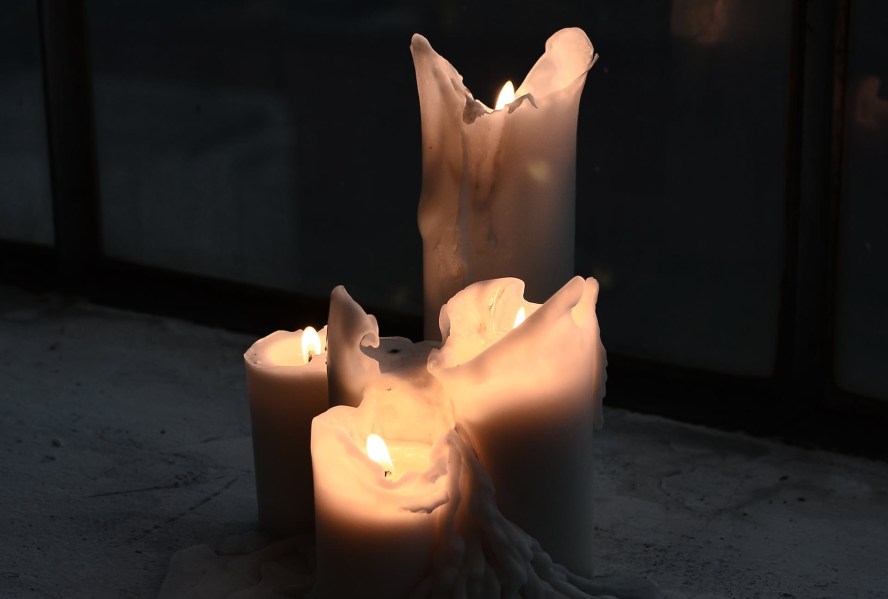
Imbolc: From Ancient Fire Festival to Modern Celebration of Renewal + Tea Ceremony

In the deep midwinter, when the cold seems unyielding, a festival of fire and light breaks the monotony with promises of spring and renewal. This is Imbolc, an ancient Celtic festival that has evolved through time but still holds fast to the essence of its inception: the reawakening of the earth and the heralding of new life.

The Roots of Imbolc

The earliest history of Imbolc is interwoven with the pastoral calendar of the Celtic people. As a culture deeply connected to the rhythms of nature, the Celts marked Imbolc as a pivotal point in the year. It was a time when the ewes began to lactate, signaling the beginning of the lambing season, an undeniable sign that the harshness of winter would soon give way to the bounty of spring.

The festival is traditionally held on February 1st, a date that falls approximately halfway between the winter solstice and the spring equinox. This timing is no coincidence; it reflects the ancient understanding of the balance between darkness and light, cold and warmth, death and rebirth.

From a seasonal perspective, Imbolc represents the awakening of nature after the long winter slumber. As the days gradually lengthen and the temperatures slowly rise, Imbolc symbolizes the first signs of spring’s arrival. It is a time when farmers and gardeners eagerly prepare for the upcoming planting season, anticipating the rejuvenation and growth that nature will soon provide.

Imbolc also serves as a reminder of the cyclical nature of life and the importance of inner transformation. Just as nature undergoes a period of rest and renewal during winter, individuals can reflect on their own personal journeys. It is a time to release old habits, set new intentions, and embark on a path of self-improvement and growth.

Imbolc offers a beautiful opportunity to honor the interconnectedness of nature, spirituality, and personal growth. Whether through participating in community gatherings or embracing personal rituals, individuals can tap into the ancient origins and modern significance of Imbolc, finding inspiration, renewal, and a deep connection to the cycles of life.


Brigid: Goddess and Saint

Central to the celebration of Imbolc is Brigid, initially revered as a goddess in the Celtic pantheon. A multifaceted deity, Brigid was the patroness of healers, poets, smiths, childbirth, and the hearth. She symbolized the fertile and creative aspect of the natural world. With the arrival of Christianity, the goddess Brigid was transformed into Saint Brigid of Kildare, a beloved figure in the Irish Christian tradition. However, the goddess’s attributes were so ingrained in the cultural consciousness that many of the pagan customs associated with her continued, albeit with a Christian veneer.

Brigid’s association with fire is particularly significant during Imbolc, as it marks the halfway point between the winter solstice and the spring equinox. As the days gradually lengthen, her presence serves as a reminder of the impending arrival of spring and the promise of new beginnings. This time of year is often seen as a fertile period, both in terms of the land and personal growth, and Brigid’s energy is thought to inspire and support these transformations.

In modern times, many people continue to honor Brigid during Imbolc by incorporating her symbolism and traditions into their celebrations. Some may create Brigid’s altars adorned with candles, flowers, and symbols of creativity and inspiration. Others may partake in healing rituals, seeking her guidance for physical or emotional well-being. Regardless of the specific practices, the essence of Brigid and her connection to Imbolc serve as a reminder of the ancient wisdom and enduring power of the divine feminine.

Brigid’s presence infuses this festival with a sense of reverence, renewal, and the anticipation of brighter days ahead. By acknowledging and honoring Brigid during Imbolc, we honor the sacred feminine energy within ourselves and connect to the ancient threads that bind us to our ancestors and the natural world.


Fires of Purification and Illumination

Fire played a central role in the festivities of Imbolc, emblematic of the rebirth of the Sun and the vital life force stirring in the womb of the earth. Hearth fires were rekindled, and candles lit to represent the returning warmth and light. Bonfires were also a common feature, with their flames signifying purification and the triumph of light over darkness.


Modern Celebrations

Today, Imbolc is embraced by many neo-pagans, Wiccans, and those inspired by the mythic past. The festival is still a time for purification and renewal. Homes are cleaned thoroughly; the remnants of the old year are swept away, making room for the new. It’s also a time for personal reflection and the setting of intentions. Just as the seeds beneath the earth are preparing to burst forth, individuals are encouraged to nurture their aspirations and prepare for personal growth.

One way to incorporate Imbolc traditions is by creating an altar dedicated to this special day. Choose items that symbolize the themes of Imbolc, such as candles, representations of Brigid, and symbols of new beginnings like seeds or sprouting plants. Light the candles and take a moment to reflect on the warmth and light returning to the world.

Candle-making! Imbolc is closely associated with the element of fire and the symbolism of light. Making candles is a beautiful way to connect with this element and create a warm, inviting atmosphere in your home. You can experiment with different colors and scents that evoke the energy of Imbolc, such as white for purity, yellow for sunlight, or lavender for healing.

Another tradition is to engage in purification rituals. Imbolc is often associated with cleansing and purifying, both physically and spiritually. Take a ritual bath with herbs like lavender or rosemary, or cleanse your sacred space with sage or palo santo. As you cleanse, visualize releasing any stagnant energy and making space for new growth and abundance.

Imbolc is also a time for divination and setting intentions for the year ahead. You can use tarot cards, runes, or other divination tools to gain insight and guidance. Take time to meditate or journal about your goals and aspirations for the coming months. Set intentions that align with the energy of Imbolc – new beginnings, creativity, and nurturing your inner flame.

Imbolc is a time of sowing seeds both literally and metaphorically. It symbolizes the potential for growth and the nurturing of new ideas and dreams. Start your own indoor herb garden or plant seeds outdoors in preparation for the coming spring. As you tend to these plants, visualize your intentions and aspirations taking root and blossoming in the months ahead.

Lastly, don’t forget to connect with nature during this time. Imbolc is closely tied to the awakening of the earth and the first signs of spring. Take a walk in nature, observe the budding trees and early flowers, and express gratitude for the cycles of the seasons. Consider planting seeds or tending to indoor plants as a symbol of nurturing your own growth and potential.


Imbolc Traditions

Traditional practices include the crafting of Brigid’s crosses from reeds or straw, a custom believed to invite protection and blessings from the saint. Another ritual is the making of a “Brigid’s bed,” a small receptacle where a figurine of Brigid is placed, accompanied by a white wand or candle, symbolizing fertility and the return of the light.

Holy wells, too, are visited during Imbolc. Offerings of coins or clooties (small strips of cloth) are left, and the water is used for blessings and healing, merging the ancient reverence for water deities with Christian practices.


Conclusion

By honoring the transformative power of Imbolc, we can tap into the energy of new beginnings and growth. It is a reminder to let go of what no longer serves us and make space for new opportunities and experiences.

Imbolc invites us to reflect on our personal journey and set intentions for the year ahead. Just as the earth prepares to blossom with new life, we too can nurture our dreams and aspirations, allowing them to take root and flourish.

This ancient festival teaches us the importance of balance and harmony, as we honor both the darkness of winter and the promise of spring. It reminds us to find beauty in the simplest of things, to appreciate the slow and steady progress, and to have faith in the unseen.

As we embrace the transformative power of Imbolc, let us carry the lessons and energy of this sacred time throughout the year. Let us be open to change, willing to release old patterns, and ready to embrace the possibilities that lie ahead.

Imbolc is a reminder that we are part of a greater cycle, connected to the rhythms of nature and the unfolding of the universe. It is a celebration of life and rebirth, urging us to embrace our own potential for growth and transformation.

So, as we light our candles and welcome the return of the light, let us also ignite the flame within ourselves. Let us harness the transformative power of Imbolc and create a life filled with joy, purpose, and abundance. May this ancient festival inspire us to embrace our own transformative journey and walk with courage and grace into the future


Imbolc Tea Ceremony: A Ritual of Renewal

The practice of a tea ceremony for Imbolc can be a serene and symbolic way to welcome the emerging light of spring. Below is a tea ceremony designed to capture the essence of Imbolc, paired with a recipe that embodies the themes of purity, awakening, and warmth.


Imbolc Tea Recipe

Ingredients:
– 1 teaspoon of dried chamomile flowers (for relaxation and purification)
– 1 teaspoon of dried nettle leaf (to support vitality and health)
– 1/2 teaspoon of dried lavender (for tranquility and a connection to early spring)
– 1/2 teaspoon of lemon peel (for brightness and the return of the sun)
– A few fresh mint leaves (for renewal and freshness)
– Honey (preferably local, to taste for sweetness and connection to the land)
– Boiling water

Instructions:
1. In a teapot, combine the chamomile, nettle, lavender, and lemon peel.
2. Pour boiling water over the herbs and let steep for about 5 to 7 minutes, infusing the water with the herbs’ essence.
3. Strain the tea into cups, add fresh mint leaves to each cup, and stir in honey to taste.


Imbolc Tea Ceremony Steps

Preparation:
– Cleanse the space where the ceremony will be held to honor the Imbolc tradition of purification. This can be done physically by tidying up and symbolically by burning a white sage smudge stick or diffusing purifying essential oils.
– Set up a small altar or centerpiece representing Imbolc, with a white or pale green cloth, a candle to signify the returning light, and perhaps a small representation of a sheep or a Brigid’s cross as a nod to the agricultural roots of the festival and to ask for Brigid’s blessings.
– Invite participants to wear white or light colors, symbolizing the purity and freshness of the season.

The Ceremony:
1. Begin the ceremony by lighting the candle and taking a few deep breaths to ground everyone present.
2. Invite participants to share what they wish to cleanse from their lives or what they hope to grow in the coming season.
3. Pour the hot water over the tea blend, allowing the scent to rise. As the tea steeps for 5 to 7 minutes, meditate on the warmth that suffuses the herbs, reminiscent of the sun warming the earth.
4. Serve the tea, add the fresh mint, and encourage each person to inhale the herbal aroma, contemplating the nurturing aspects of Brigid or the notion of rebirth and renewal.
5. Sip the tea slowly, discussing the flavors and how they might correspond to the elements of Imbolc—chamomile for peace, nettle for health, lavender for the first hints of spring, lemon for the sun’s warmth, and mint for new beginnings.
6. Conclude the ceremony by setting intentions for the coming spring. Each participant might write their intention on a bay leaf and add it to the candle flame, watching as their hopes are symbolically transformed into smoke and carried upwards.
7. Finish by expressing gratitude for the light and warmth that are returning to the world, and for the companionship and shared intentions of the group.

This Imbolc tea ceremony and recipe offer a moment of contemplative respite, allowing participants to connect with the cycle of the seasons and the promise of spring’s return. It’s a time to revitalize the spirit, cleanse the old, and prepare the soil of the heart for new seeds to be sown.

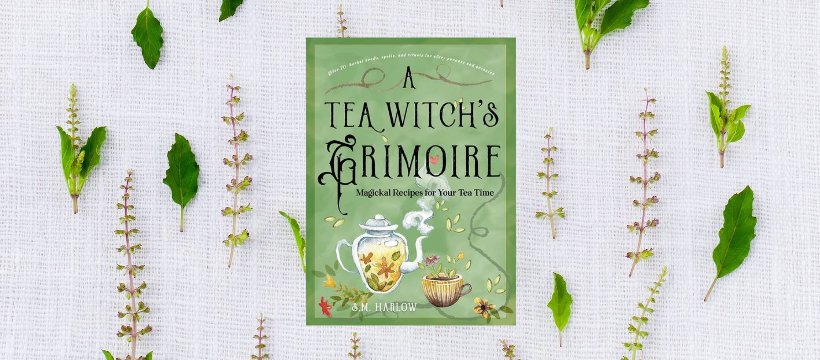
A Tea Witch’s Grimoire: A New Edition

A Tea Witch’s Grimoire: A Magical Journey through Enchanted Teas

There’s something mystical about a warm cup of tea, isn’t there? It can be comforting, calming, and even healing. But what if I told you that tea has the potential to unleash a world of magic? Intrigued? I am thrilled to introduce you to my new book, “A Tea Witch’s Grimoire”, which takes you on a captivating journey into the realms of magical teas, spells, rituals, and herbal correspondences. What’s even better? You can now pre-order it on Amazon and indulge in the Sample for a taste of what’s to come!

https://www.calameo.com/red-wheel_weiser-books/books/0055709747c44bd17edf7

Tea as a Gateway to Magic:
What sets “A Tea Witch’s Grimoire” apart is the unique blend of herbal knowledge, spellcasting, and tea brewing techniques. As an avid tea lover and practitioning witch myself, I’ve poured my heart and soul into creating this comprehensive guide for all tea enthusiasts, magical explorers, and curious souls alike.

Unlocking the Secrets:
Every page of this book holds a treasure trove of information and enchantment. The book begins by sharing the fundamental concepts of tea magic, guiding you through the art of blending teas, and understanding herbal correspondences. Whether you are a beginner or seasoned practitioner, you’ll find a wealth of wisdom to deepen your craft.

Spells and Rituals:
“A Tea Witch’s Grimoire” brings you an array of spells and rituals designed specifically for tea magic. From love spells to prosperity rituals, each chapter is filled with practical examples that bring tea and magic together in harmony. You’ll discover how to infuse your teas with intention, how to choose the perfect tea for your spellwork, and how to incorporate tea magic into your daily life.

Herbal Correspondences:
The intricacies of herbal correspondences come alive in this book, with detailed explanations of the magical properties and uses of various herbs. From lavender for relaxation to chamomile for dreamwork, you’ll uncover the hidden potential of countless herbs and their affinity to different aspects of your life.

Sample and Pre-Order on Amazon:
To truly experience the enchantment within “A Tea Witch’s Grimoire,” you can now explore the Sample available. This tantalizing glimpse will give you a taste of the book’s contents, sparking your curiosity and leaving you eager to uncover more. And if you are as captivated as I think you’ll be, don’t hesitate to pre-order the full book. That way, you’ll be among the first to dive into this mystical journey as soon as it releases.

https://amzn.to/3pTCsmC

Conclusion:
Magic and tea blend harmoniously in “A Tea Witch’s Grimoire” to offer a delightful and transformative experience. Whether you’re an aspiring witch, an herbal enthusiast, or someone simply searching for a new way to infuse magic into your life, this book holds the key to unlocking the power of enchanted teas. So, why wait? Pre-order this captivating masterpiece on Amazon now, grab a cup of your favorite tea, and embark on a magical journey that will forever change the way you view both tea and witchcraft. Cheers to a life steeped in vibrant enchantment!

Virgo Magick

Hello and Welcome!

Virgo, the virgin maiden, is a time to celebrate the wild freedom that is within all of us. To once again feel that innocent joy and run with it. Virgo reminds us that we need to know who we are and what passions we seek. To perfect our craft and get creating! I’ve always felt strongly drawn to Virgos, perhaps because my father is one. But, I believe it is also because Virgo’s carry a sense of strength like non other in the zodiac. It’s almost regal and their determination for seeking their inner truth is noteworthy.

Because of this, I decided to dedicate a tea blend and a few spells for Virgos. In no way does this mean that only Virgos can do this however. This is for anyone who wishes to seek to tap into their own inner Virgo.


P.S.

As an Amazon Associate I earn from qualifying purchases.

Thank you for the love and support!


I chose these specific teas for good reason. One being they each incorporate the essence of Virgo. Virgos are ruled by the planet Mercury, and are the element of Earth.

Lavender, in my opinion, represents all that it means to be Virgo. The flower of Mercury, it evokes chastity, peace, love, and protection.

Mugwort is an herb of Earth.

Lastly, dried Peaches. The tie that binds this blend together. This fuzzy little fruit is the Moon’s eye, and not only is it used for love and intuition, it obtains truth. So naturally, pair these all together to find your inner truth.

Here is the recipe I used for a 2 cup portion.

If the flavor is a bit bland from the Mugwort, add a couple of pinches of coconut sugar. Yummy!

*don’t drink if pregnant or allergic. Expect lucid dreaming, and a very mild head high. Don’t drink beyond 3 days, or more than a pot of tea.*


Now, you can’t have tea without including a sweet hot bath to pair with it.

This recipe was perfect at the end of the night. Especially to align yourself, and prepare for the journey to inner truth. By all means, however, take this bath whenever you like.

Instructions:

The recipes consists of 1 cup of coconut sugar, and 1 cup of powdered milk. Then add 15 drops of Bergamot essential oil. If you wish for more however, or less, that’s up to you. Although, be vigilant, since Bergamot is photosensitive. So, immediately shower after the bath. Or, even consider using earl grey tea. I would have, but I ran out of my favorite brand.

Now, take a long hot soak and meditate.


Virgo Spells

Any spells for luck, wealth, finances, healing, and manifesting.


Money Spray

Patchouli (herb or oil)

Instructions:

Brew the herb as a tea and let it sit for 10 minutes. As it steeps, chant over it:

Pat my pockets, chew my money, but it shall always return back to me. 

Strain the tea, and mix with half of Spring water. Or add 7, 10, or 11 drops of patchouli oil to a full bottle of Spring water. And place it in a spray bottle. Lay out all your money, credit/debit cards, taxes, etc and give it a good spritz. Not too much, wouldn’t want to soak your money! And repeat the chant from above. 

Anything you spend, shall return back to you. 


Agrimony Bath

This cleansing provides psychic and magical healing.

Instructions:

Make a strong infusion by pouring boiling water over the agrimony. Let it cool, then strain out the botanical material. Dip a white cloth into the infusion and gently bath with it in the bath.

If you don’t wish to use the dried herb, you may also use this wonderful Flower Remedy of Agrimony!

Same concept. Use the dropper to place about 15 – 20 drops into the bath water and use a white cloth to cleanse yourself.

This concoction can also be used to banish negative energies and spirits. Agrimony has long been used to reverse spells sent against another. Not only does it break hexes, but also sends them back to the hexer.


San Cipriano Oil

This oil is universal. It is said that when blended true to your Spirit, it can create miracles. But it must be blended with pure intentions and not for selfish needs. 

Cover the roots with olive, sunflower, and/or jojoba oil. Add the oils as the last step. 

As it is being created, one must be a state of meditation. Your soul shall lead you in creating this miracle blend. 


Any of the links above are to trusted Amazon sources that I have personally bought my witchcraft supplies from. I guarantee you’ll have a positive experience.

Great Moon Blessings everyone, and enjoy the recipes!

Blessed Be )○(


If you found this article to be helpful, please like, share, and/or follow!

Virgo Magick!

GOOD WITCH KEEPING SERIES (Waning Magick)

Welcome!

I find it so important to love your home and care for it the way it ought to be. Almost as much as you love yourself, really. It’s your home, after all. A lot of the time, we get so caught up with fast paced living that we forget to maintain our environment, and often times, we end up feeling the negative energies that stick to the walls of our home. One could honestly compare that to when we don’t do self-care.

Who would want to live in that environment? Or visit it?

So one may ask themselves, what sort of magick should you be conjuring in your home during the waning moon (last quarter)?

We focus on banishing, cleansing, and protection.

We burn incense, we dust, we vacuum. This is a time to focus on spells especially for breaking bad habits.

Below are a few and simple ways to conjure this sort of magick into the home.


P.S.

As an Amazon Associate I earn from qualifying purchases.

Thank you for the love and support.


Hot House Powder

Instructions:

Combine equal parts in a mortar and pestle. Grind to a fine powder. Burn over charcoal and use a cleansing tool to smudge across the halls and rooms of your home.

OR

You can place the powder in a black drawstring bag, and either place or pour across front/back doors, windows, bedrooms, or at the center of your home.

*Note* – If you cannot find Sulfur, you may substitute with Tobacco.

This Hot House Powder is perfect for cleansing and protecting your home. This is especially good if your home has recently been visited by unwanted guests. That goes for evil spirits as well. Or, your home is being swept by a sickness. Any kind of negativity. As well as, if you feel like black magick is being casted your way.


Breaking A Bad Habit Spell

Instructions:

This spell will give you a good reason to dust around the home, especially when your bad habits are often done at home. Collect the dust you swept and save in a bowl. Combine an equal amount and/or grind the needed herbs together. Mix this powder with the collected dust.

You will need to get the amount of candles to the same amount of bad habits you want to break. Ex: you have 3 bad habits, so you will need 3 candles.

Carve into each candle ONE word that represents the bad habit. Ex: DRUGS. GAMBLING. PROCRASTINATION.

Now, you will need a flat surface. With the powder, you will use it to draw out this symbol below:

Now place the candles along the corners of the sigil. If you are only using one candle, place in the center.

Focus your intentions on each candle when you light it. Allow the candles to burn down, along with your bad habits. See them burn away.

Once the candles are burned down, you may collect the powder and bury it outside from your home.

The spell is done.


Red House Carpet Powder

Instructions:

You will need a 1/2 cup of both the Baking Soda and Borax. Mix together. Then you will add 20-25 drops of Sandalwood Essential Oil. Mix thoroughly. Pour this mixture into the glass container. Then, sprinkle this powder over your carpets. Leave for 15-20 minutes, then vacuum.

I LOVE this Red House Carpet Powder. I use it EVERY time I vacuum. It leaves my carpets smelling so good, and the vibrations practically glow. It cleanses the area, and leaves it with a barrier of protection.


Well, I hope these spells are welcomed and bring forth good blessings.


All items that I share are items that I have personally bought for my craft. I guarantee positive sources and experiences with these Amazon stores.


If you found this article helpful, please like, share, and/or follow.

Blessings!

Waning Moon Spells For The Good Witch Keepers

Dedicating An Animal Spirit

Hello and Welcome!

I’ve recently discovered a ritual that is both beautiful and magickal. If you are one that finds your pet to be special and powerful, then this is the spell for you. If you are also one who finds great purpose in worshiping deities, then this is the ritual for you.

This ritual is dedicating an animal to a specific Spirit. This will create a profound triangular relationship between human, spirit and animal. This ritual derives from indigenous Siberia, but with a twist.


P.S.

As an Amazon Associate I earn from qualifying purchases.

Thank you for the love and support!


THE SPELL

  1. Choose a specific animal to be dedicated to a specific deity. ( I will include a list of animals and the deities that are associated with them.)
  2. Purify the animal with juniper incense.
  3. Sprinkle it with wine.
  4. Decorate the animal with ribbons in colors associated with the specific Spirit.
  5. Offer the animal an infusion of 1 teaspoon of honey to 1-2 cups of water.
  6. The animal is returned home or to its flock. It is now never ridden, eaten, or worked. It is treated special and allowed to enjoy its life as a gesture of sacrificial devotion. This treatment may extend over the animal’s entire natural life or for a specific period of time. This must be specified during the initiation.

ANIMALS AND THEIR DEITIES

CATS:

Artemis. Bastet. Freya. Hecate. Lilith.

BIG CATS:

Dionysus. Durga. Hathor. Kybele. Sekhmet.

DOGS:

Artemis. Hecate. Ogun. Saint Roch.

HORSES:

Anat. Demeter. Epona. Poseidon. Rhiannon. Rla-mgrin (Hayagriva)

TOADS:

Agwe. Heket.

SNAKES:

Athena. Ezilli Freda Dahomey. Lilith. Mami Waters. Simbi. Lady Asherah.

COWS:

Brigid. Hathor. Hermes. Isis. Lakshmi. Maeve. Shiva.

FISH:

Atargatis. La Baleine. La Sirene. Yemaya.

PIGS:

Demeter. Seth.

DEITIES THAT PROTECT ALL ANIMALS:

Aphrodite. Artemis. Baba Yaga. Faunus. Hathor. Lilith. Saint Anthony.

If you enjoyed this article, please like, share, or follow!

Great Blessings!

Dedicate An Animal Spirit!

Secret Wisdom of the Witch Wife

Welcome, and thank you for crossing the hedge!

Below is an interview with an extraordinary woman, whose wisdom goes beyond many I’ve ever spoken to. For personal reasons, she chooses to remain private, but permits her craft to be told and shared.

I learned a new term today from this Crone whom I just met. Her aura was pure and green. Her character is patient and wise. She has seen 60 moons. Harnessed her craft for the last 49 suns.

She termed herself a Witch Wife. When I asked her what that was, she gifted me with her knowledge.

Much like a midwife and a hedgewitch, a Witch Wife teaches the ways of the craft to the young, until they reach mature adulthood. They stay together until the student ends their raising, decides to become a Witch Wife themselves, or get traditionally married.

I asked, “why until they get married?”

She said because at that point the pupil’s power is no longer their own. It is merged with their partner’s, and therefore, new traditions are created. The apprentice will carry on their own solitary craft, and may wish to pass it on to their children. They can also decide to have a Witch Wife tutor them.

I asked, “is a Witch Wife often unmarried?”

She answered yes, a Witch Wife is a woman who is free of vows to another. They are solitary practitioners, save for the teachers that raised them. When they first decide to become a Witch Wife, a ritual is done that weds the new wife to her craft. A small private ritual is held with other Witch Wives pesent. This event is often planned on the eve of a new season.

After the new Witch Wife takes a period to establish herself, a novice is chosen and passed on to her to have tutored. This youth is called a Witch Child. This pupil becomes her child of the craft to pass on the wisdom.

I asked, “how is a Witch Child chosen? Can you raise more than one?”

She answered yes, she has raised two. Some take up to three. The Witch Child is often an offspring from a pupil who had either chosen to marry, or had given birth to a babe(s). The Witch Child needs to show interest in the craft before they are chosen. Then is asked if they would like to be taught by a Witch Wife. There are some rare cases where a Witch Child is chosen from a friend of the Witch Wife’s.

I asked, “can a Witch Wife ever get married if she wishes to?”

She answered yes, but this is considered infidelity towards the Witch Wife’s craft. She will know that she will never fully belong to her partner, as well as to her craft. She will be in a state of eclipse. Only when she is widowed, will she be free of her vows to her partner. If she births children, it is still tradition that they may be tutored by another Witch Wife, if the child wishes it.

I then asked, “can a married Witch Wife still tutor other pupils?”

She answered no, because at that point she is eclipsed. A Witch Wife must be faithful to her craft in order to lead a Witch Child through the bright and shadowed aspects of their craft. A married Witch Wife has one eye shut. That is the eye that is focused on her marital bed, and the concerns of her partner. A Witch Wife must have both eyes focused on her craft, and on the success of her Witch Child.

I then asked, “are married Witch Wives looked down upon in your group?”

She answered no, of course not. They are family. They were all Witch Children that were raised by Witch Wives. They are still invited to attend events, outings, and some rituals. They are all a very close knit group. Their children are accepted and often taught in the ways as well.

I asked, “what happens if a Witch Child decides not to be a Witch Wife, or doesn’t want to continues their studies?”

She answered, a Witch Child is free to end their studies at any point during their growth. If they stop their studies midway, they will no longer be called a Witch Child. If a Witch Child decides to not become a Witch Wife at the end of their studies, she will be called a Witch Soul, and carry on a solitary practice. She won’t participate in the same Witch Wife rituals.

I asked, “how often is a Witch Child tutored?”

She answered, it depends. For some it can be once or twice a week. For others, it can be more. It depends on location, schedule, and the child’s enthusiasm. It is much like an afterschool program, because for some Witch Children, they come straight from school until their parent(s) pick them up after work. During school breaks, fun study outings such as campings are planned.

I asked, “are Witch Children/Wives always female?”

She answered, Witch Wives are always female. Not to discriminate today’s gender roles and beliefs, but because that has been the way of their tradition. There have been two Witch Children that were boys. Only one had completed his studies, however, and continued on to practice as a solitary Witch Soul.

I asked, “does a Witch Child have to begin their studies when they are a child, or can they be older?”

She answered, it is generally recommended that they begin young. Before the thirteenth birthday. There is a rare chance an older child may be taught, but the Witch Child has to study for a longer period of time.

I then asked, “until when is a Witch Child’s studies complete?”

She answered, when they complete each phase of their lessons. It is not just craft knowledge they are learning, it is also the process of growth that they are surpassing. Children undergo a serious change of mind and heart when they reach puberty. For some, it is often a struggle to get through the raging thoughts and emotions. Witch Wives especially stand by their Witch Child when these years are developing. Teach them the ways of growing past it. When all lessons have been exceeded, is when a Witch Child has completed their raising.

I asked, “is a Witch Wife’s craft similar to any other witchcraft practice? Is it a religion?”

She answered that it is not a religion. There is no one Deity or the worship of Gods. There is only nature, the magick it harbors, and the techniques to tap into that power. Their practice focuses on healing, ancestral magick, conjuring, and sharpening the intuition. Witch Wives are wed to the infinite power that sources all things, and thus are linked to that magick. Their practice involves herbal knowledge, charms, potions, spells, gardening, livestock, and divination.

I asked, “how long has this tradition been around?”

She answered, since the early 40s. A very small group of three women followed Irish/Scottish/Germanic folk magick traditions, formed the practice. They were unwed, but wholeheartedly believed in their craft. One had two daughters, and each were given to one Witch Wife to raise in the craft. One Witch Child became a Witch Wife, the other became a Witch Soul. That Witch Soul had children that were passed over to the other Witch Wives to raise. And it has been that way since the beginning. There have been five generations, so far.

I asked, “is there a hierarchy order to this tradition?”

She answered, yes in a way. Wisdom is more so in the Witch Wives. That, and Witch Wives are wed to the craft. Therefore, their power is linked to it, and are the only ones able to pass on the gifts to the Witch Children. A Witch Wife practices all forms of their magick.

Witch Souls are the Witch Children that complete their raising, but, they do not become Witch Wives. Therefore, the power is their own to use. They are a sole practitioner. A Witch Soul mostly practices healing and divination.

Witch Children are the young that are raised by a Witch Wife. During their training, they are taught all the forms of their practice. During this time, Witch Children share their power with the Witch Wife to understand the craft.

It is seen as a family system, then a hierarchy one.

I asked, “what kind of spells and rituals do you do? How are they formed?

She answered that she didn’t wish to go into detail about how their spells and rituals are created, or all of the spellwork that they do. But, that generally they are focused towards healing, fertility, prosperity, and protection, just to name a few.

I asked, “do you think your practice will grow bigger? Gain notice? Do you want it to?”

She answered she doesn’t believe it will grow bigger, or that it will gain notice. Some traditions are better to keep small. Their practice is a craft that takes time. Not all who practice would agree with it, or would believe in it. That is all right, because magick is a shared practice that is invoked in many methods. In many beliefs. New and old.

She didn’t really express if whether she wanted it to gain notice or grow bigger. She simply included, that she was just happy to share her story with someone of a open heart, and hopes others will see it as such.

●●●●●●●●●●●●●●●●●●●●●●●●●●●●●●●●

This was the most inspiring conversation and I am so thankful to share this amazing family’s craft tradition. I humbly thank you for entrusting me with this wisdom. Thank you, thank you.

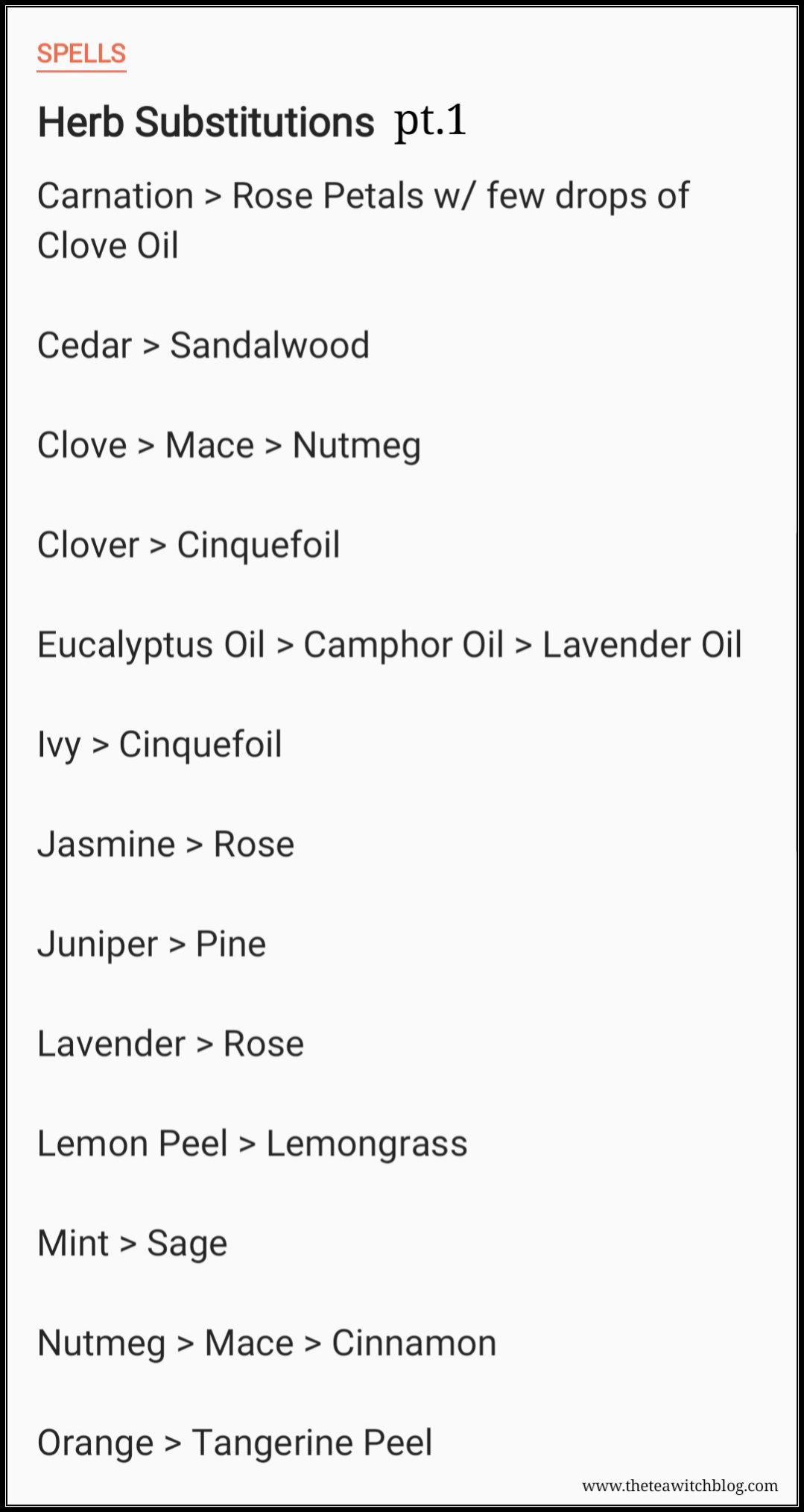
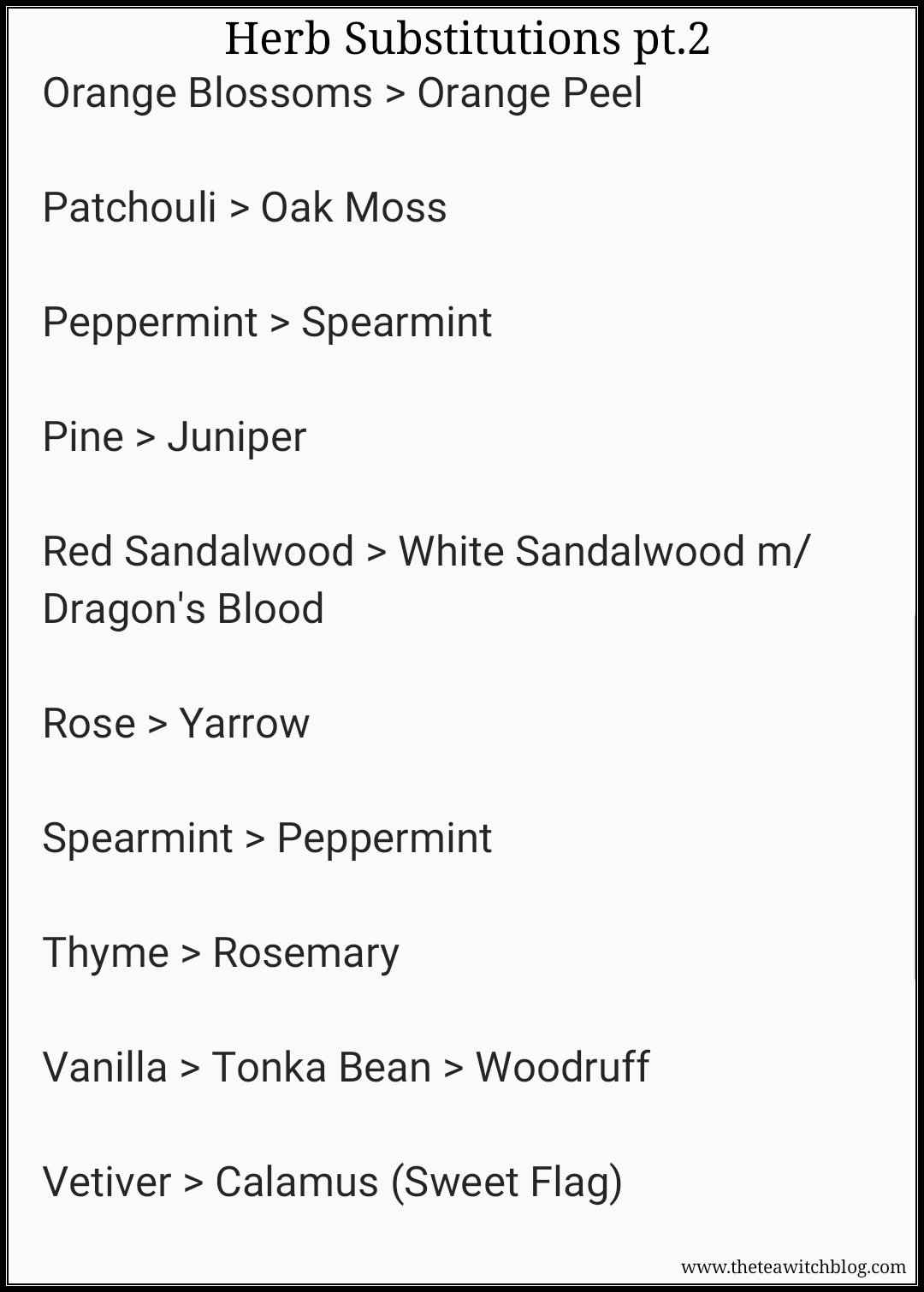
Herb Substitutions

Welcome!

As many herbal witches may know, our special recipes, whether passed down, or handcrafted, can require certain types of herbs. Many of these herbs are common kitchen ingredients, but there are some that do need special plants for the occasion.

However, there is always the issue that we may just never encounter such an herb, because of location, price, time of year. So, what do we do in such a situation? We substitute!

Below you will find a two part list of common herbs that have other herbs to use if you don’t have the necessary ingredient.


P.S.

As an Amazon Associate I earn from qualifying purchases.

Thank you for the love and support!


Here is where you may find these herb ingredients. Follow their links for guidance:

Here is where you may find these herb ingredients. Follow their links for guidance:

Just in case you’re uncertain, the first herb is the main ingredient. If you do not have it, follow the “>” symbol to the next herb. That is the herb to substitute with.

“M/” means to mix with.

“W/” means with.

Soon, I will write the list for rare herb substitutes. Be on the look out!

Great Blessings and Knowledge!

If you found this article helpful, please like, share, and/or follow!

HERB SUBSTITUTIONS!

GOOD WITCH KEEPING SERIES

Merry Spring!

So, a new series came to mind while I started my Spring Cleaning. Every proper Witch always uses their magick while tending to their home. If you aren’t, then I highly recommend doing so. It is the perfect way of incorporating and practicing your craft every day. And who wouldn’t want their home sparkling with good vibes and surrounded in protection?

Therefore, I decided to list my own methods. Now, keep in mind, that every Witch has their own practices. This list is merely my own, and what has worked for my house. Either gather some ideas, or blend these practices with your own.

Now, the list is pretty explanatory. But I’ll go over them in detail if one wishes to understand how I came up with these.

New Moons are a time for starting a new cycle again. A complete cleanse from the previous energy, and to create a different sort of goals to take shape. A witch could see this as an opportune time to purify themselves, their ritual tools, altar, and homes. Hence, a good reason why I like to sweep and mop during this week of the New Moon. I love brewing together my own floorwashes and powders to use for this time. More on those recipes later.

Once the Moon begins to wax, energies are growing. Like a seed, goals begin as such. And by the time the Moon is within its first quarter, the energies are sparking. Therefore, this is a great time to burn any kind of drawing incense or simmering pots. In this case, drawing mixes that attracts fortune, luck, health, love, blessings, etc. Normally, I do these sort of drawing magicks for maintaining the positive flow in my home. To keep everyone healthy. Positive luck. Peace and creativity. Etc.

Now, it is no surprise when I write how any hearth/home magick can be done during the Full Moon. Because that is just so. The week leading up to the Full Moon is enhanced with energy. Any magick, whether it is fertility, protection, wealth, banishing, anything, is perfect for this time. So have at it!

Much like the New Moon, energies during the Last Quarter are low, but they are still humming. This is the time to put that power to rest and banish any unwanted energies that may have accumulated during the month. I like to vacuum and dust during this time. Dust bunnies and other nasty dirty particles are what is left of the old negative energies. They harbor and hold onto these remnants, so it’s important to be rid of these to prepare for the New Moon. Breaking Bad Habit spells are perfect during this chore.

I hope you enjoy the list. And keep on the look out, there will be more to the series on the way.

If you found this article helpful, please like, share, and/or follow!


GOOD WITCH KEEPING SERIES!

New Spring, New Kind of Lemonade!

As promised, I posted not to long ago a recipe that I experimented with. It was the first night of the Spring season, and I felt inspired for something refreshing, and relaxing.

My husband has had a good stash of cannabis in the pile, and I thought it was a good time to medicinally use some of it. That, and I had a good amount of lemons that needed to go.

What are the magickal properties to this wonderful recipe, you might be wondering? Well, my full intention was a good positive purifying recipe, from the lemons. For the cannabis, I used it to bring a deep calming spiritual balance. And of course, the sugar to sweeten and bless.

So, at about one in the morning, I went at it! (I knoooooow, late night owl over here lol).

Here are the ingredients:

  • 1 1/2 cup Sugar
  • 6 cups Water
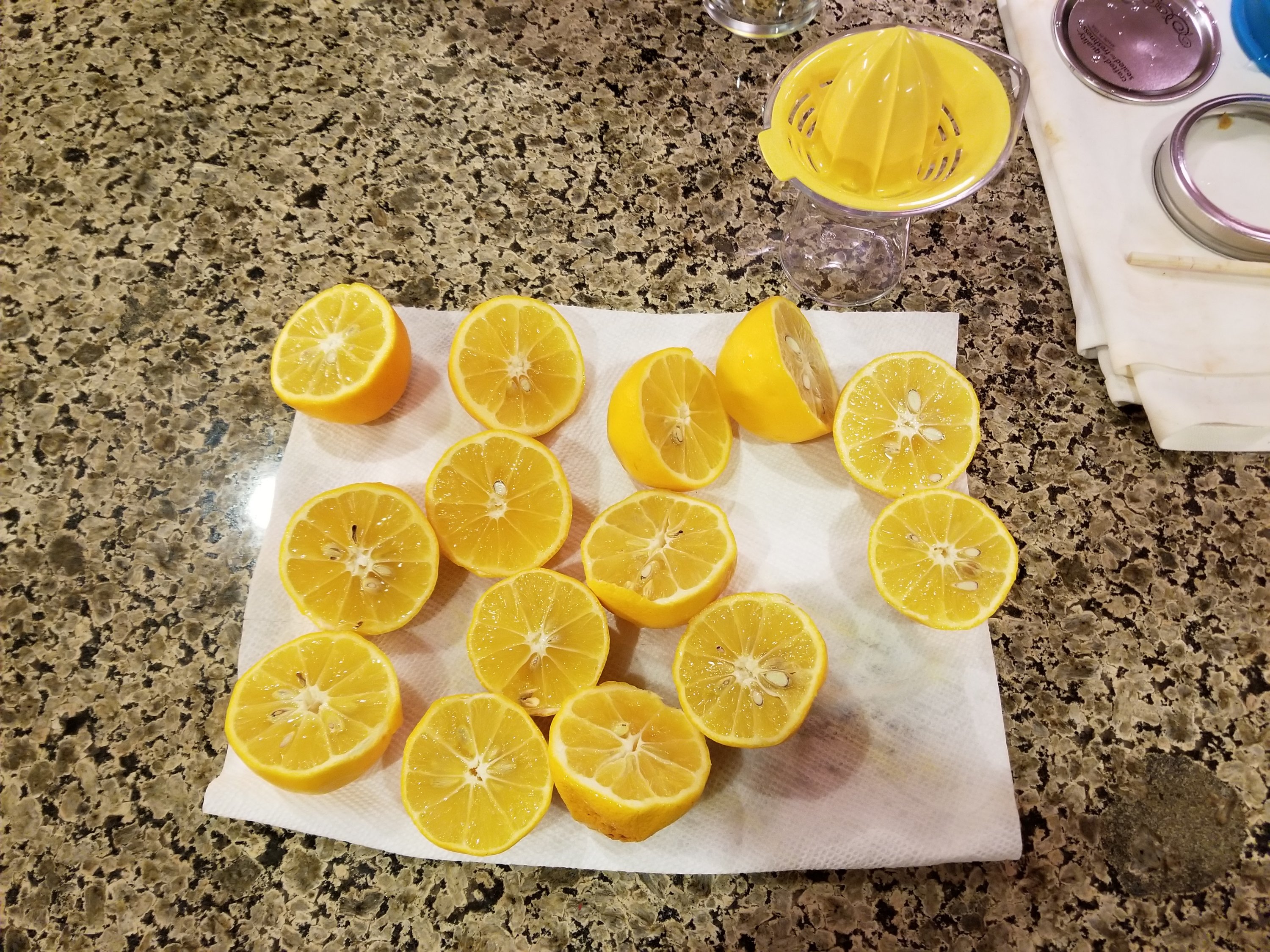
  • 1 1/2 cup lemon juice (about 6-8 lemons)
  • 1 tbsp Cannabis (or how ever much you prefer. 1 tbsp is pretty mellow per one cup.)

Instructions:

  1. In a saucepan, combine sugar, cannabis, and 1 1/2 cup of water. Cook over medium heat until the sugar is completely dissolved. 4-5 minutes. Then turn down the heat and let it simmer for 22 minutes.
  2. In the meantime, begin juicing your lemons until you are at 1 1/2 cup of liquid. I like to use a cheesecloth to strain out the pulp. If you’re a pulp person, then never mind this step.
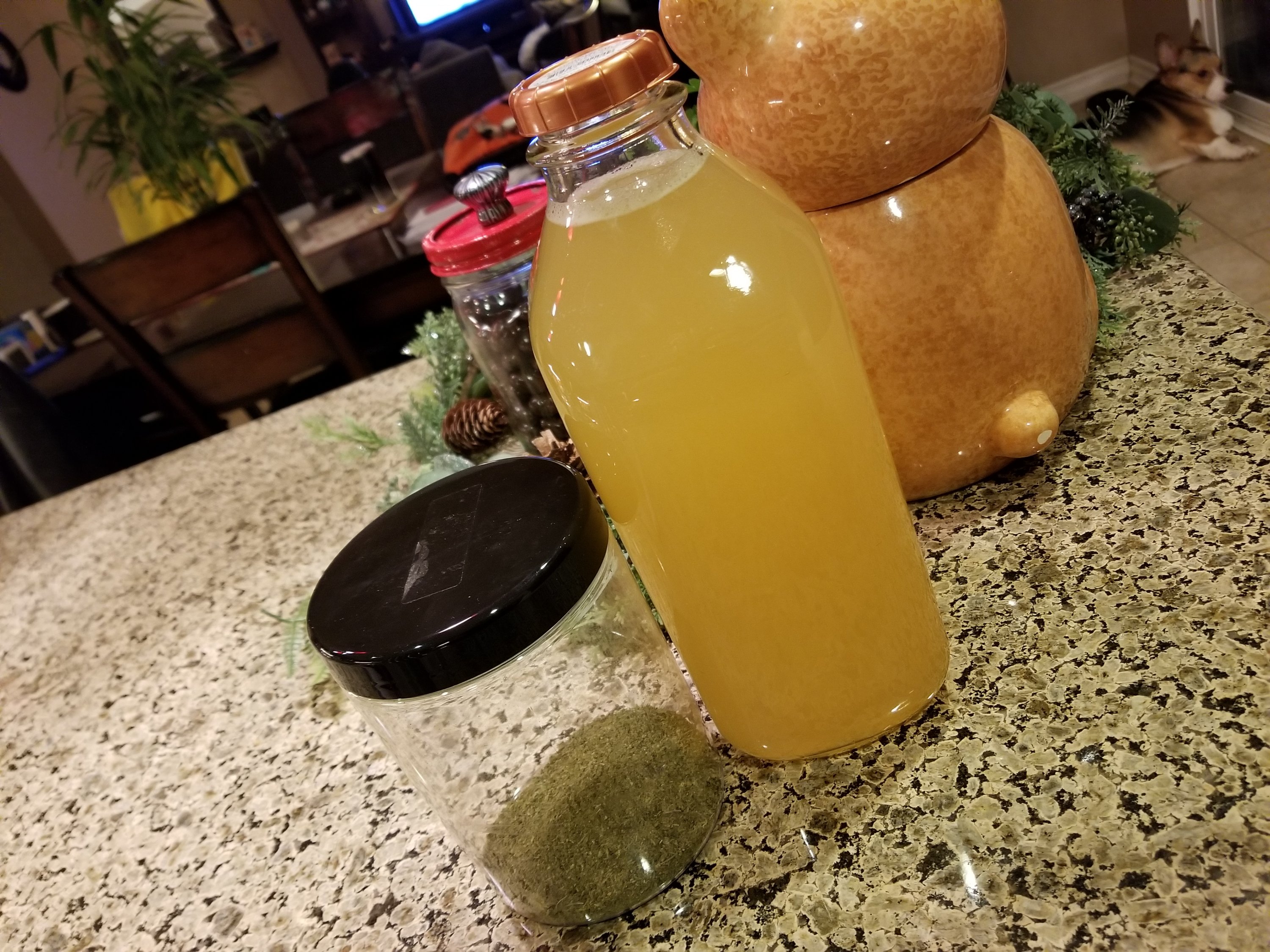
  3. Now, remove the cannabis syrup from the heat, strain, and pour into your pitcher. Stir in lemon juice. Let the syrup cool. Then, add the rest of the water and stir until well combined.
  4. Store in the refrigerator, and enjoy over ice.

*Note* So, for a 1 tbsp of cannabis per one pitcher, I found it to be very relaxing and soothing. It took 3 cups for me to actually feel any other effects, and really, that only helped me sleep deeper. So, if your one that prefers a mellow blend, then this recipe should do. For one that wishes for a stronger effect, add 1 or more tbsp to your sugar water mix.

*Note Note* If you are on a certain diabetic or keto restricted diet, then you can do what I actually did for this recipe. Substitute the cane sugar for your own sugar substitute. In this case, I used monk’s fruit sugar. Same measurement. Yum!

Step 1.

Step 2.

Step.3

I hope you enjoy this blend responsibly, and legally! Have fun!

If you found this article helpful, please like, share, and/or follow!

Cannabis Lemonade Is Our Way to Mellow Yellow!